Fast shipping from Sweden Member of EU
 0
0





Top brands




































Having a good sleeping pad can be the difference between a good night's sleep and a stiff back, especially when sleeping outdoors. It's not just about comfort - it's also an important part of insulation against ground cold and moisture. A sleeping pad that's too thin or the wrong type will make you cold, even if your sleeping bag is warm. In this guide, we list the best sleeping pads in tests, focusing on models that we at Tacticalstore are happy to recommend for both adventure and preparedness.
We go through different types of sleeping pads - from ultra-light variants for hikers to thicker models for base camp and emergency storage. Whether you prioritize weight, insulation, pack size or durability, there's something that suits you. All the sleeping pads on the list have been selected because they really work.
Here we have collected six sleeping pads that we at Tacticalstore often recommend to people who want something that actually works when it comes to it. It doesn't matter if you are going to pitch a tent in the mountains, lie down in a windbreak at the edge of the forest or just want a sleeping pad ready in the emergency box - the right pad makes a big difference to both sleep and warmth.
In this list of the best sleeping pads in the test, we have selected different types that suit different needs. Some weigh almost nothing and pack minimally, others are a little larger but provide better insulation and comfort. Some are best suited for summer nights, others can handle sub-zero temperatures without a problem. Whether you prioritize low weight, durability or just want to sleep better outdoors - here is something for you.
Snugpak Travelite is a self-inflating sleeping pad that combines low weight with good comfort - perfect for those who want to sleep comfortably outdoors without carrying heavy loads. With a weight of only 615 grams (including the sack) and a compressed size of 26 x 15 cm, it is easy to pack in your backpack.
The surface is non-slip, which reduces the risk of you sliding around during the night. The self-inflating system has a combined inflation and locking valve, so you can adjust the hardness exactly as you want. With a length of 183 cm and a thickness of 2.5 cm, it is suitable for most body types, both in tents and windbreaks.
Advantages:

Savotta FDF is a sleeping pad that has its roots in the Finnish defense industry, and it shows. Here you get a solid base with built-in ground protection, perfect for those who sleep directly on the ground or in rougher terrain. The bed itself is a 12mm thick foam plate, and on the sides there are 25cm wide "wings" that give you a clean and dry surface around the sleeping area - a total of 100cm in width.
The underside is rubberized to lie still on the ground, even on snow, rocks or wet grass. The entire construction is durable, water-repellent and provides better insulation than a regular foam base thanks to the tight cover. Easily rolled up with the integrated elastic bands and withstands tough handling.
Advantages:

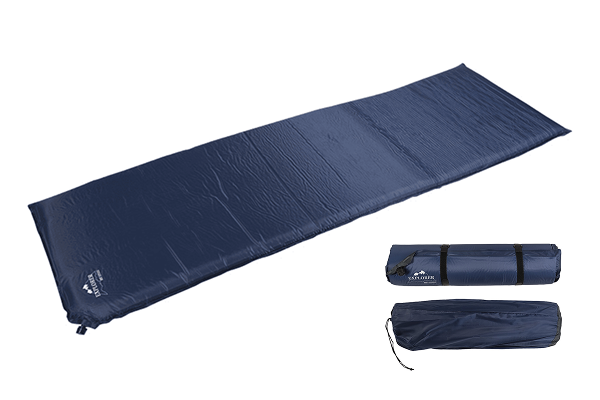
Mil-Tec Explorer Extreme Thermo is a self-inflating sleeping pad for those who prioritize warmth, comfort and solid insulation. With a height of 10cm, it effectively protects against cold ground and uneven surfaces - regardless of the season. This is not something you throw in your lightweight backpack, but perfect for base camp, the car or as extra equipment in your emergency kit.
The pad is filled with Thermo padding in open-cell polyurethane foam and covered with durable polyester with PU coating. It comes with a stuff sack, straps and repair kit. With its size of 200 x 66cm, it is also suitable for tall users who want to sleep really comfortably outside - without freezing.
Advantages:
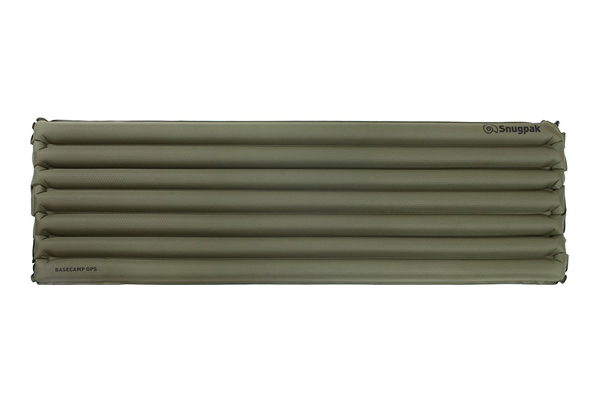
Snugpak Air Mattress with Pump is a smart alternative for those who want a little more comfort than a classic sleeping pad, but without dragging a large mattress with you. With a built-in foot or hand pump, you can easily inflate the mattress in a few minutes - no external pump needed and no hassle with inflating yourself.
It is 8cm thick, weighs only 630 grams and packs down to 28 x 12cm - so light enough to take in your backpack. The 230T polyester fabric feels durable but soft, and the size fits most people. A good compromise between weight, comfort and simplicity - for both camping and hiking.
Advantages:
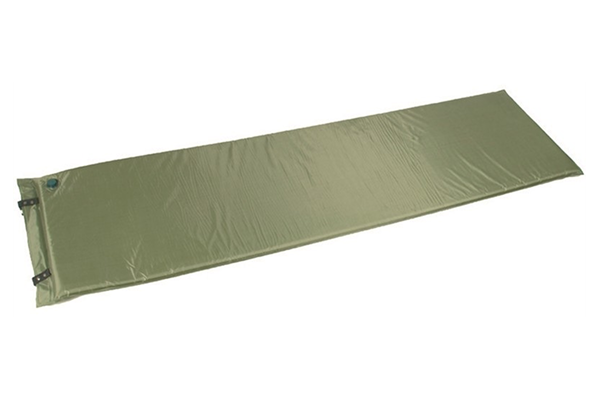
This self-inflating sleeping pad from Mil-Tec is a stable and flexible choice for those who want something simple but still works well outdoors. You just open the valve, wait a minute or so and adjust the hardness with a breath - then it's ready to use.
The thickness of 3 cm provides good comfort without taking up too much space in the pack. The pad weighs 1350 grams and rolls up easily to a pack size of 55 x 13 x 11 cm. The outer part is made of durable polyester and the filling consists of polyurethane foam. Comes with a packing bag.
Advantages:
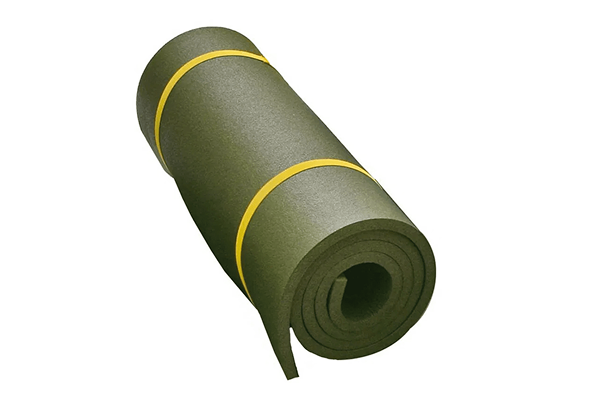
Proelia Liggunderlag 15 mm är ett klassiskt cellplastunderlag som funkar i alla väder. Med sin 15 mm tjocklek ger det grundläggande isolering mot markkyla samtidigt som det är lätt att rulla ut och packa ihop. Det väger lite, tål tuff hantering och kräver inget underhåll - perfekt som basutrustning för både friluftsliv och beredskap.
Underlaget är 180 cm långt och 60 cm brett, vilket passar de flesta. Skummet är något fastare än vanligt, vilket gör att det håller formen bättre och ger bra stöd. En smidig lösning för dig som vill ha något enkelt och funktionellt.
Fördelar:
Everyone has different needs when it comes to sleeping pads. Some prioritize light weight, others want maximum comfort. Some need something that can withstand the winter cold, while others just want a simple protection from the ground. Here we go through the most common types of sleeping pads and what they are best suited for.
Self-inflating sleeping pads are a cross between foam and air - and one of the most popular choices. They are easy to use, provide good insulation and provide good comfort. You just roll out the pad, open the valve and let it fill with air. You can then adjust the firmness by blowing a little extra or pushing out the air. Perfect for hiking, camping or as an extra layer in cold conditions.
If you want to sleep really comfortably but still have something light and compact, then inflatable models are a good option. They weigh little and pack small - but often provide 6-10 cm of thickness. Some have a built-in pump, others require you to inflate them yourself. Keep in mind that they do not insulate as well as foam if they lack internal padding, but in terms of comfort they are often at the top.
The classic foam base is durable, works in all weathers and cannot be punctured. It is not the most comfortable, but it is one of the most reliable choices - especially in colder temperatures. Many choose to combine a cellular plastic base with a mattress on top, for both insulation and comfort.
Some sleeping pads - such as the Savotta FDF - are built to withstand tough use in the field. They often have extra protection against ground cold, a non-slip underside and integrated ground protection. They weigh a little more, but provide robust functionality in demanding environments.
If you really want to maximize comfort - or insulate even more against the cold - you can combine a sleeping pad with a camping bed. Raising your body off the ground provides an extra layer of air insulation and protects against moisture, cold and unevenness. It's a smart solution for those who sleep in a tent in the fall and winter, or for those who are building a base camp.
Read our article about the best camping bed in the test.
It's not about finding the most expensive or the most advanced. It's about choosing the right thing for the right use. Do you need something fast, light and durable? Then foam plastic is hard to beat. Do you want to sleep comfortably in a tent for several nights in a row? Then self-inflating or air-filled models are worth looking at. Are you going to sleep in the middle of winter or add extra protection to your emergency preparedness? Then you might want to have both. One to sleep on - one to trust.
For winter use, you need a sleeping pad with good insulation against ground cold. Thicker self-inflating pads or an inflatable one with insulating filling work best. One tip is to combine it with a foam pad underneath for extra protection. Mil-Tec Extreme Thermo is a good example of a winter-friendly sleeping pad.
Self-inflating sleeping pads contain foam that expands when you open the valve - then you adjust the amount of air yourself. Inflatable mattresses lack foam and are inflated completely with air, either with a pump or by hand. They are usually lighter and thicker, but insulate less well if they do not have internal padding.
Yes, but it requires the right type of sleeping pad. Ordinary thin pads are not enough. Choose something with high insulation (high R-value) and preferably with extra thickness. Foam also works well directly on snow, especially in combination with an extra layer on top.
It depends on what you find comfortable and how you sleep. For back or side sleeping, 5-10cm is often just right. A foam pad is often around 1-1.5cm, but there it is mainly the insulation that you are looking for - not the cushioning. If you want really good comfort, choose 8-10cm.
In an emergency situation, it is important to have a sleeping pad that does not break, that insulates against the cold floor and does not require additional equipment. In that case, a classic foam pad or a self-inflating pad is the best choice. They are easy to store, do not require a pump and always work.
|
|
|
|