Fast shipping from Sweden Member of EU
 0
0




Top brands






























In this article, we will present some of the best hunting knives that stand out from renowned brands like Karesuandokniven, Brusletto, Cold Steel, Condor, and Fällkniven. Are you a passionate hunter or outdoor enthusiast searching for the perfect hunting knife for your adventures? Then you've come to the right place. In our comprehensive guide for 2023, we have compiled a list of the best hunting knives on the market. Whether you prefer a reliable classic or the latest innovative technology, our best-in-test guide will help you find the optimal hunting knife that suits your needs.
The Fällkniven Professional Hunter’s Knife (PHK) is a high-quality hunting knife with a unique design tailored for the serious hunter. Developed with a deep understanding of the demands and needs of hunting, this knife is an indispensable tool for handling game in the field. Its sharp laminated powdered steel and ergonomic handle provide hunters with precision and reliability, enhancing the hunting experience and increasing safety during the execution of hunting tasks. For hunters who value quality and reliability, the PHK is an essential investment that will serve you well in all your hunting adventures.
Advantages:
Disadvantages:
This hunting knife is nothing short of an icon. Since its launch in 1961, it has been Norway's best-selling hunting knife, and its popularity endures to this day. With a blade adorned by a gentle curve that smoothly transitions into a drop-point, this knife offers a unique curve specially tailored for hunting. The sharp edge is made with Scandinavian straight edge technology, and the handle is constructed from colored masur birch with an aluminum bolster. A knife measuring 25.5 cm in total length with a 13.5 cm blade. The blade is made of stainless steel 1.4116N, and it comes with a black leather sheath.
Advantages:
Disadvantages:
Cold Steel Master Hunter is an impressive hunting tool with the new CPM3-V carbon steel and DLC coating, providing the knife with exceptional sharpness and durability, especially when field-dressing larger game. With a grippy Kray-Ex handle and a practical Secure-Ex sheath, this is a reliable companion for hunters. Weighing 181 grams and with a total length of 235 mm, it's easy to handle and carry.
Advantages:
Disadvantages:
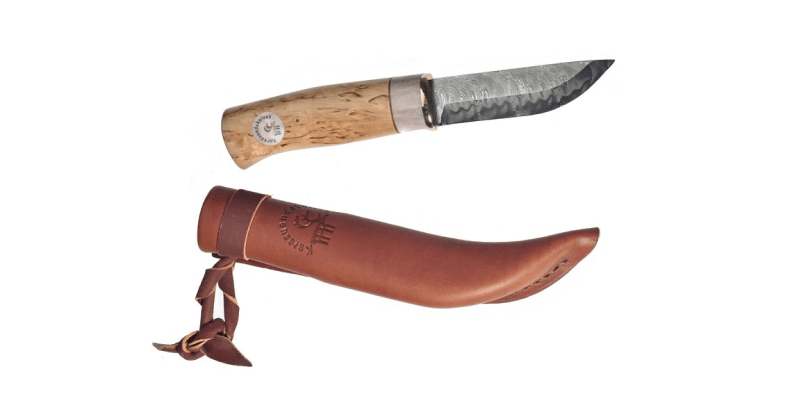
An exclusive Damascus knife with a handle made of light Masur birch, reindeer horn and brass, complete with a blade made of Swedish Damasteel®. The beautiful pattern on the blade is called Nordic Light™. Every Damascus knife in our range comes with a sheath and a diamond edge for sharpening. This luxury hunting knife makes a perfect gift and with the elegant gift box it is ready to be handed over on arrival. With a combination of exclusive materials and skilled craftsmanship, this knife offers both style and functionality for the discerning user.
Advantages:
Disadvantages:
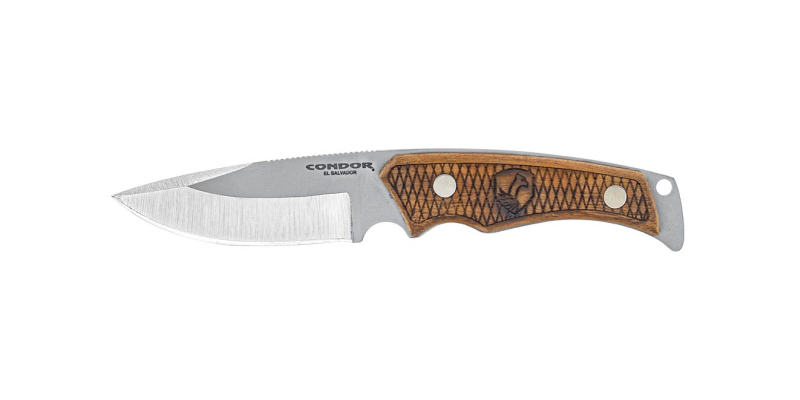
Condor Okavango is the perfect hunting knife for your next hunting adventure. It features a durable stainless steel blade with a comfortable handle and finger choil that allows you to get close to the blade for maximum control. This knife comes from El Salvador and has intricate textures on the handle scales for a secure grip. Put on the Okavango and head out to capture game.
Advantages:
Disadvantages:
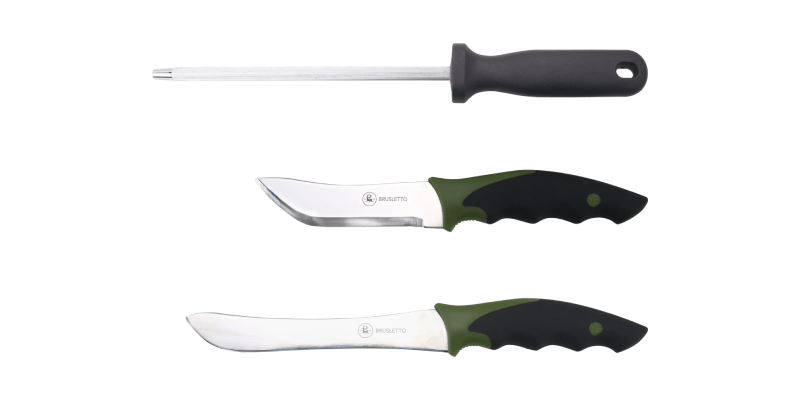
Brusletto's butchering set is the perfect tool for hunting and butchering enthusiasts. It includes a durable Cordura storage bag, a practical sharpening steel, a skinner knife, and a butcher knife. The storage bag can be easily fastened around the waist for quick and easy access to the necessary knives during the butchering process. Its smart design has space for up to five knives and a sharpening steel, with secure sheaths that keep the knives in place during transport.
Advantages:
Disadvantages:
Choosing a hunting knife is not just a practical matter; it's a decision that reflects your personality, skills, and your way of enjoying nature. When you're faced with the task of buying a new hunting knife, it's important to be well-prepared and make an informed choice. This guide provides insights and advice to make your selection as smooth and advantageous as possible.
First and foremost, you should ask yourself: What is the primary purpose of your hunting knife? Will it be used for skinning game, performing simple carving tasks, or perhaps both? Each hunting knife has unique features that make it better suited for specific tasks. If you plan to use your knife for filleting, you should choose one with a special design for fillet cutting. For general purposes, look for an all-purpose knife with versatility in various situations.
Hunting knives come in several different blade styles, and the choice of blade style affects its functionality. Here are some common styles:
Drop Point: This style has a slightly straight back that then slopes down towards the belly of the blade, providing a sharp point and an emphasized belly, ideal for stabbing, cutting, and sweeping motions.
Clip Point: A clip point knife has a back that curves down toward the tip of the blade, giving a sharper belly and a more intricate, fillet-like cut.
Straight Back: Knives with straight backs have a completely straight back that meets a curved belly. These are usually not as effective for chopping and stabbing tasks.
Spear Point: Knives with spear points have blades where both the back and the belly start straight and meet in the middle of the knife to create a sharp point. These are ideal for stabbing tasks.
Tanto Point: This type is similar to a fillet knife with a narrow, long blade that is good for long cuts.
The choice of blade style should be based on your specific needs and use cases. If you're unsure, try to find an all-purpose style that works well for different tasks.
When it comes to the type of knife, you primarily have two options: fixed blade knives and folding knives. Fixed knives are sturdy and reliable, perfect for those who need a reliable work knife for big tasks. Folding knives are more compact and portable, which is ideal if you need a knife that can go with you everywhere. Consider your usage and whether you need a specific knife for butchering or a more all-purpose knife.
The blade material is a critical factor when choosing a hunting knife. You want a blade made of high-quality steel that retains its sharpness. Here are some popular knife materials:
Stainless Steel: Stainless knives are resistant to corrosion and relatively easy to maintain. They are good for general use but can be challenging to sharpen if they lose their edge.
Carbon Steel: Carbon steel knives have excellent sharpness and hold it well. However, they require regular oiling and maintenance to prevent rust.
Damascus Steel: Damascus steel is known for its beautiful pattern and high hardness. It's an excellent compromise between stainless and carbon steel.
When it comes to hardness, the Rockwell scale (RC) is a good measure. A knife with a hardness of at least 55 RC is preferable, as it provides good sharpness and durability.
The length of your knife blade affects how well it performs various tasks. A shorter knife is more portable and easier to handle, while a longer knife provides more support and precision for tasks like butchering. Consider how you will use your knife and choose the length that best suits your needs.
Regardless of which hunting knife you choose, maintenance and care are essential to keep it in top condition. Regular cleaning and sharpening are necessary to maintain the knife's performance and longevity. Invest in a sharpening tool and learn the right techniques to care for your knife.
In summary, when choosing a hunting knife, you should consider your purpose, blade style, knife type, blade material, blade length, and how you plan to care for it. A thoughtful process will ensure that your hunting knife becomes a reliable companion during your outdoor adventures and lasts for many years to come.
|
|
|
|